


Ozone layer depletion
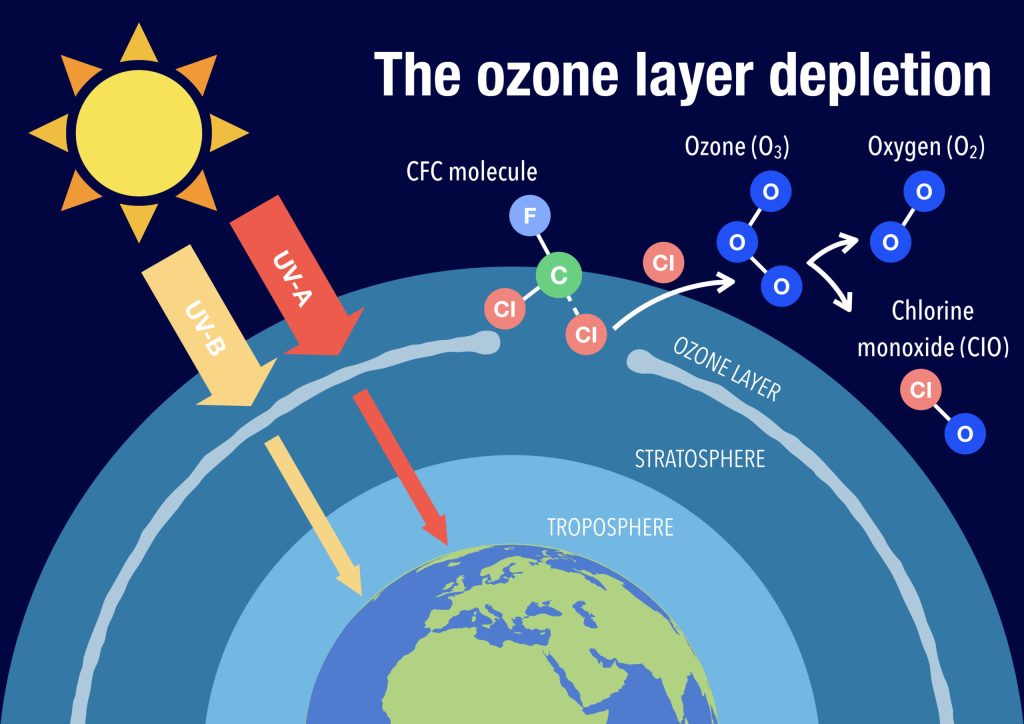 The ozone layer is a region of Earth's stratosphere that contains a high concentration of ozone (O₃) molecules. It plays a crucial role in absorbing and blocking the majority of the Sun's harmful ultraviolet (UV) radiation. Depletion of the ozone layer can lead to increased UV radiation reaching the Earth's surface, which has serious environmental and health consequences.
Also read: chemistry-of-ozone-layer-depletion
Causes of Ozone Depletion:
Chlorofluorocarbons (CFCs):
- Description: CFCs are synthetic compounds used in refrigeration, air conditioning, and as propellants in aerosol sprays.
- Impact: CFCs release chlorine atoms when they are broken down by UV radiation in the stratosphere. These chlorine atoms react with ozone, leading to its depletion.
Halons:
- Description: Halons are used in fire extinguishers and contain bromine, which is highly effective at destroying ozone molecules.
- Impact: Bromine from halons also contributes to ozone layer depletion, often more efficiently than chlorine.
Carbon Tetrachloride and Methyl Chloroform:
- Description: These compounds were used as solvents and in industrial processes.
- Impact: Similar to CFCs, these chemicals release chlorine when they break down in the stratosphere.
Hydrochlorofluorocarbons (HCFCs) and Hydrobromofluorocarbons (HBFCs):
- Description: HCFCs and HBFCs were introduced as replacements for CFCs, but they still contain chlorine or bromine.
- Impact: Although less damaging than CFCs, they still contribute to ozone depletion.
Natural Sources:
- Volcanic Eruptions: Volcanoes can emit substances like chlorine and bromine, which can affect the ozone layer.
- Stratospheric Water Vapor: Water vapor can contribute to ozone depletion by participating in reactions that produce ozone-depleting compounds.
Effects of Ozone Depletion:
Increased UV Radiation:
- Health Risks: Higher levels of UV radiation can lead to an increased incidence of skin cancer, cataracts, and other health problems in humans.
- Ecosystem Impact: UV radiation can affect plant growth, phytoplankton, and marine ecosystems, disrupting food chains and reducing biodiversity.
Climate Change:
- Temperature Effects: Changes in ozone levels can influence temperature distribution in the stratosphere, which may have indirect effects on climate patterns.
Agricultural Impact:
- Crop Yields: Increased UV radiation can damage crops and reduce agricultural productivity.
International Response:
Montreal Protocol (1987):
- Description: An international treaty aimed at phasing out the production and use of ozone-depleting substances.
- Achievements: The Montreal Protocol has been successful in reducing the emissions of CFCs and other harmful substances. It is considered one of the most effective environmental agreements ever implemented.
Kigali Amendment (2016):
- Description: An amendment to the Montreal Protocol that aims to phase down the use of hydrofluorocarbons (HFCs), which are potent greenhouse gases.
- Impact: The Kigali Amendment is expected to contribute to both ozone layer recovery and climate change mitigation.
Current Status and Future Outlook:
Recovery Trends:
- Ozone Layer Recovery: According to scientific assessments, the ozone layer is on track to recover to its pre-1980 levels by around mid-century, thanks to the measures taken under the Montreal Protocol.
Monitoring and Research:
- Ozone Monitoring: Ongoing monitoring from satellites and ground-based instruments continues to track the state of the ozone layer and assess the effectiveness of international agreements.
Continued Vigilance:
- Emerging Issues: Monitoring continues to address potential new threats, such as the impact of climate change on ozone recovery and the production of new chemicals that might affect the ozone layer.