


Acid rain
1. Introduction
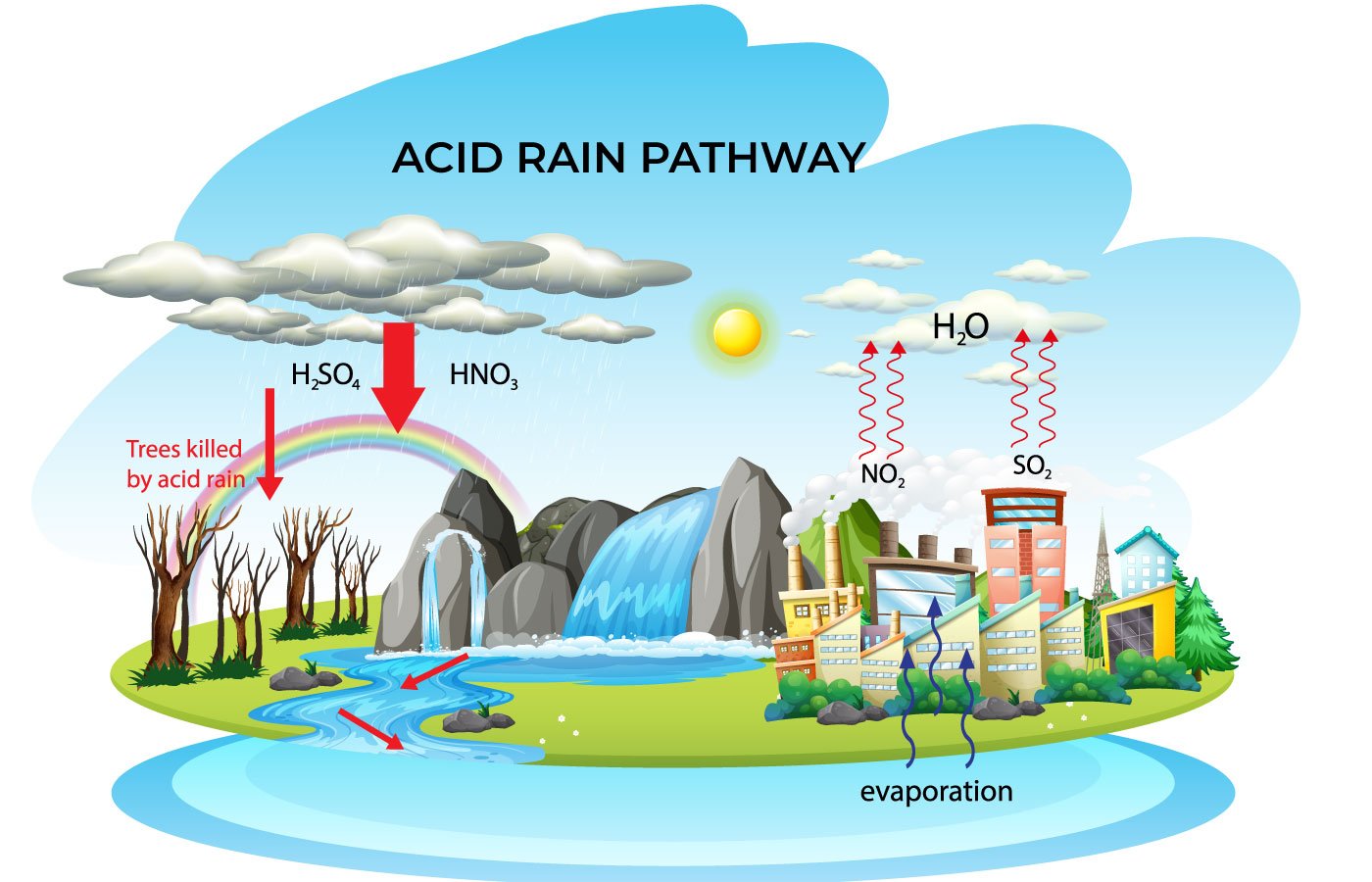
Acid rain refers to the precipitation of rain, snow, sleet, or fog that contains higher-than-normal levels of acidic components such as sulfuric acid (H₂SO₄) and nitric acid (HNO₃). It is a significant environmental issue that results from the release of sulfur dioxide (SO₂) and nitrogen oxides (NOₓ) into the atmosphere, primarily due to human activities like burning fossil fuels.
2. Causes of Acid Rain

a. Natural Sources:
- Volcanic Eruptions: Volcanoes emit sulfur dioxide and other gases that can contribute to acid rain.
- Decaying Vegetation and Wildfires: These processes release natural sulfur compounds into the atmosphere.
b. Human Activities:
- Fossil Fuel Combustion: The burning of coal, oil, and natural gas in power plants, industrial facilities, and vehicles releases large amounts of sulfur dioxide (SO₂) and nitrogen oxides (NOₓ).
- Industrial Processes: Factories, especially those involved in smelting metals, refining oil, and processing chemicals, also emit significant quantities of SO₂ and NOₓ.
3. Chemical Reactions Leading to Acid Rain

Once released into the atmosphere, SO₂ and NOₓ undergo a series of chemical reactions:
Formation of Sulfuric Acid:
- SO₂ + O₂ → SO₃ (Sulfur trioxide)
- SO₃ + H₂O → H₂SO₄ (Sulfuric acid)
Formation of Nitric Acid:
- NOₓ reacts with water to form nitric acid (HNO₃).
These acids are then mixed with cloud droplets and fall to the ground as acid rain.
4. Types of Acid Deposition
a. Wet Deposition:
- Occurs when acid rain, snow, or fog falls to the ground. This form of deposition directly affects lakes, rivers, and soil.
b. Dry Deposition:
- Involves acidic particles and gases that settle on surfaces such as buildings, vegetation, and water bodies. When these particles later come into contact with water, they form acids.
5. Environmental Impacts of Acid Rain
a. Aquatic Ecosystems:
- Acidification of Water Bodies: Acid rain lowers the pH of lakes, rivers, and streams, leading to a more acidic environment. This can harm aquatic life, particularly fish and invertebrates, which are sensitive to changes in pH.
- Disruption of Food Chains: The reduction in fish populations due to acidic waters can disrupt the entire aquatic food chain.
b. Soil Degradation:
- Nutrient Leaching: Acid rain causes essential nutrients like calcium and magnesium to leach out of the soil, making it less fertile.
- Release of Toxic Metals: It can mobilize harmful metals such as aluminum from the soil into water bodies, further impacting plant and aquatic life.
c. Forest Damage:
- Leaf Damage: Acid rain can directly damage the leaves and needles of trees, impairing photosynthesis.
- Weakening of Trees: By depleting essential nutrients in the soil, acid rain weakens trees, making them more susceptible to disease, extreme weather, and insect infestations.
d. Structural Damage:
- Corrosion of Buildings: Acid rain can accelerate the decay of buildings, monuments, and statues, particularly those made of limestone, marble, and concrete.
- Metal Corrosion: It can also corrode metals, leading to increased maintenance costs for infrastructure.
e. Human Health:
- While acid rain does not pose a direct threat to human health, the pollutants that cause acid rain—SO₂ and NOₓ—can contribute to respiratory problems, including asthma and bronchitis.
6. Mitigation and Control Measures
a. Reducing Emissions:
- Clean Energy Sources: Switching to renewable energy sources like wind, solar, and hydroelectric power can reduce SO₂ and NOₓ emissions.
- Emission Control Technologies: Installing scrubbers and catalytic converters in power plants and vehicles can significantly cut down the release of harmful gases.
b. Legislative Actions:
- Regulations: Governments have enacted laws to limit emissions of SO₂ and NOₓ. For example, the U.S. Clean Air Act has provisions that have led to a reduction in acid rain-causing emissions.
- International Agreements: Cross-border pollution control agreements are crucial since acid rain can affect regions far from the source of pollution.
c. Liming of Affected Areas:
- Soil and Water Treatment: Adding lime (calcium carbonate) to acidic lakes, rivers, and soils can neutralize the acidity, helping to restore the environment. However, this is often a temporary solution and can be costly.