


Fossil fuels and hydropower, nuclear, solar, and wind energy

1. Fossil Fuels
Description:
Fossil fuels—coal, oil, and natural gas—are formed from the remains of ancient plants and animals over millions of years. These fuels are extracted from the Earth and burned to release energy.
Uses:
- Electricity Generation: Power plants burn fossil fuels to produce electricity.
- Transportation: Oil is refined into gasoline, diesel, and jet fuel to power vehicles, ships, and airplanes.
- Heating: Natural gas and coal are used for heating homes, industrial processes, and producing steam.
Environmental Implications and Impacts:
- Greenhouse Gas Emissions: Burning fossil fuels releases carbon dioxide (CO2) and methane (CH4), leading to global warming and climate change.
- Air Pollution: Combustion emits pollutants like sulfur dioxide (SO2), nitrogen oxides (NOx), and particulate matter, contributing to smog, acid rain, and respiratory diseases.
- Water Pollution: Oil spills and coal mining activities can contaminate water bodies, harming aquatic ecosystems.
- Habitat Destruction: Extraction processes such as mining and drilling can lead to deforestation, habitat loss, and land degradation.
Advantages:
- High Energy Density: Fossil fuels provide a large amount of energy per unit, making them efficient for heavy-duty applications.
- Established Infrastructure: The global energy system is heavily reliant on fossil fuels, with widespread infrastructure for extraction, transportation, and consumption.
- Reliability: Fossil fuels provide a stable and consistent energy supply, crucial for meeting base-load electricity demand.
Disadvantages:
- Finite Resources: Fossil fuels are non-renewable and will eventually be depleted.
- Environmental Impact: Significant contributors to air pollution, climate change, and environmental degradation.
- Health Risks: Exposure to pollutants from fossil fuel combustion can lead to respiratory and cardiovascular diseases.
2. Hydropower
Description:
Hydropower is generated by harnessing the energy of flowing or falling water to spin turbines connected to generators, producing electricity.
Uses:
- Electricity Generation: Hydropower plants provide a significant portion of the world's renewable electricity.
- Water Management: Dams used for hydropower also assist in flood control, irrigation, and water supply.
Environmental Implications and Impacts:
- Habitat Disruption: Dams and reservoirs can alter river ecosystems, affect fish migration, and reduce biodiversity.
- Greenhouse Gas Emissions: While generally low, large reservoirs in tropical regions can produce methane emissions from decomposing organic matter.
- Social Impact: Large hydropower projects can displace communities and disrupt local economies.
Advantages:
- Renewable: Hydropower relies on the natural water cycle and is a renewable resource.
- Low Operating Costs: Once built, hydropower plants have low operating and maintenance costs.
- Flexible and Reliable: Hydropower plants can quickly adjust output to meet fluctuating electricity demands.
Disadvantages:
- High Initial Costs: Building dams and reservoirs requires significant upfront investment.
- Environmental and Social Impact: Can cause significant ecological and social disruptions, especially with large-scale projects.
- Dependency on Water Availability: Hydropower production can be affected by droughts and seasonal water flow variations.
3. Nuclear Energy
Description:
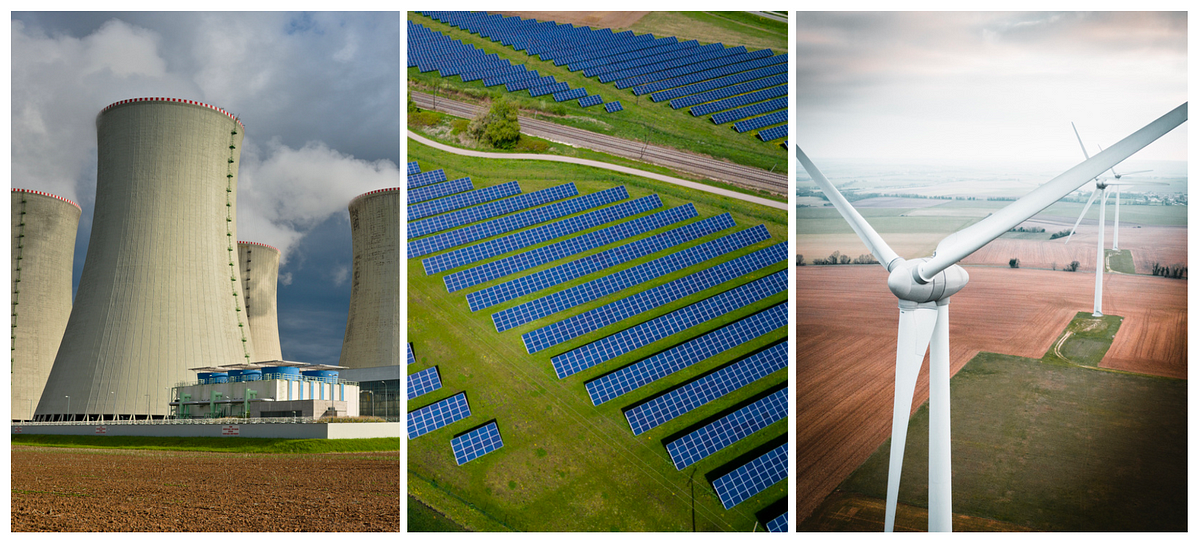
Nuclear energy is produced through nuclear fission, where the nuclei of atoms, typically uranium or plutonium, are split to release a large amount of energy. This energy is used to produce steam that drives turbines to generate electricity.
Uses:
- Electricity Generation: Nuclear power plants generate a significant portion of the world’s electricity, especially in countries like France and the United States.
- Medical Applications: Radioisotopes produced in nuclear reactors are used in medical imaging, cancer treatment, and sterilization of medical equipment.
Environmental Implications and Impacts:
- Low Greenhouse Gas Emissions: Nuclear power emits very low levels of CO2 during operation, making it a low-carbon energy source.
- Radioactive Waste: The production of nuclear energy generates radioactive waste that requires long-term storage and management.
- Risk of Accidents: Nuclear accidents, though rare, can have catastrophic environmental and health consequences, as seen in Chernobyl and Fukushima.
Advantages:
- High Energy Density: A small amount of nuclear fuel can produce a large amount of energy.
- Base-load Power: Nuclear power plants provide a steady and reliable supply of electricity, essential for meeting constant demand.
- Low Operational Emissions: Once operational, nuclear plants emit negligible amounts of air pollutants.
Disadvantages:
- Radioactive Waste: Managing and storing nuclear waste is a major challenge due to its long-lived radioactivity.
- High Initial Costs: Building nuclear power plants requires significant capital investment and long lead times.
- Accident Risk: The potential for catastrophic accidents, though low, poses significant safety and environmental risks.
4. Solar Energy
Description:
Solar energy is harnessed from the sun’s radiation using photovoltaic (PV) cells that convert sunlight directly into electricity, or through solar thermal systems that use mirrors or lenses to focus sunlight and generate heat.
Uses:
- Electricity Generation: Solar panels are used in homes, businesses, and large-scale solar farms to produce electricity.
- Heating: Solar thermal systems are used to heat water or provide space heating in buildings.
- Portable Power: Solar-powered devices, such as chargers and lanterns, are widely used in remote or off-grid areas.
Environmental Implications and Impacts:
- Low Environmental Impact: Solar energy production produces no direct emissions, making it one of the cleanest energy sources.
- Land Use: Large solar farms require significant land area, which can affect local ecosystems and agriculture.
- Resource Use: The production of solar panels involves mining and processing materials like silicon, which can have environmental impacts.
Advantages:
- Renewable and Abundant: Solar energy is inexhaustible and available globally.
- Low Operating Costs: Once installed, solar energy systems have minimal operating and maintenance costs.
- Scalability: Solar energy systems can be deployed at various scales, from small rooftop installations to large solar farms.
Disadvantages:
- Intermittency: Solar energy production is dependent on weather conditions and daylight availability, requiring energy storage or backup systems.
- Initial Costs: The upfront cost of solar panels and installation can be high, though prices are decreasing.
- Resource-Intensive Manufacturing: The production of solar panels requires significant energy and raw materials.
5. Wind Energy
Description:
Wind energy is generated by wind turbines that convert the kinetic energy of moving air into mechanical power, which is then converted into electricity.
Uses:
- Electricity Generation: Wind farms, both onshore and offshore, contribute to the grid with renewable electricity.
- Mechanical Power: Historically, windmills were used for grinding grain, pumping water, and other mechanical tasks.
Environmental Implications and Impacts:
- Low Environmental Impact: Wind energy produces no direct emissions, making it a clean source of power.
- Wildlife Impact: Wind turbines can pose a threat to birds and bats, potentially disrupting local wildlife.
- Land Use: Wind farms require large areas, though they can coexist with agriculture and other land uses.
Advantages:
- Renewable and Clean: Wind energy is inexhaustible and produces no greenhouse gases during operation.
- Cost-Effective: Wind energy has become increasingly cost-competitive with fossil fuels.
- Scalable: Wind energy can be developed at various scales, from small individual turbines to large wind farms.
Disadvantages:
- Intermittency: Wind energy production depends on wind availability, which can be unpredictable and requires backup power or storage systems.
- Noise and Visual Impact: Wind turbines can be noisy and are often considered visually intrusive, leading to opposition in some communities.
- Wildlife Concerns: Turbines can affect local wildlife, particularly bird and bat populations.
Each energy source—fossil fuels, hydropower, nuclear, solar, and wind—has its unique set of characteristics, advantages, and disadvantages. While renewable energy sources like solar and wind offer cleaner alternatives with lower environmental impacts, they face challenges such as intermittency and resource-intensive manufacturing. Non-renewable sources like fossil fuels and nuclear power provide reliable energy but come with significant environmental and safety concerns. A balanced energy mix, incorporating multiple energy sources and improving technology, is essential for meeting global energy demands while minimizing environmental impact.